How Often Should You Pressure Wash Your Driveway in NC?
Annual baseline for NC driveways, what accelerates grime, why sealing extends the clean.
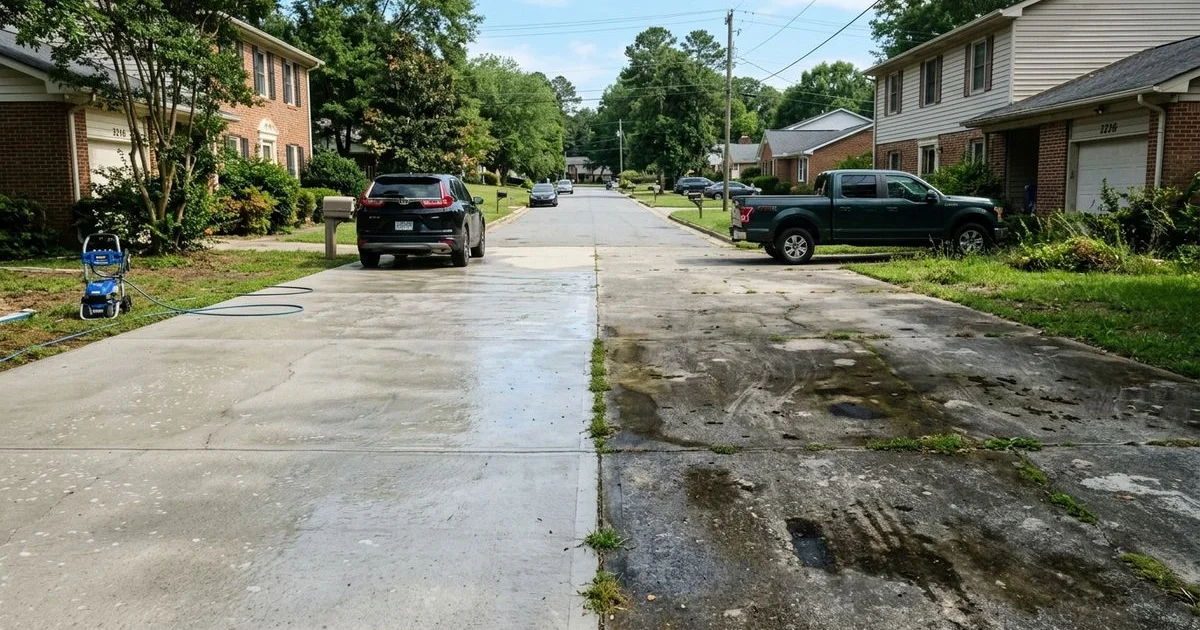
We often see property owners wait until their concrete is completely black before scheduling a wash. This delay allows algae and grime to slowly eat away at the porous surface. According to 2026 data from Angi, pouring a new concrete driveway in Raleigh averages $6,400.
Our maintenance strategies protect that major financial investment.
Regular cleaning prevents permanent damage. Let’s look at the data, what it actually tells us, and then explore a few practical ways to respond.
The NC baseline: annual
Our baseline recommendation for most Raleigh driveways is an annual pressure washing, typically scheduled for late spring after the pollen drops. The yearly cycle keeps the concrete from accumulating tougher stains. Pine tree pollen, which peaks heavily from February through May in the Piedmont region, creates a sticky yellow film that traps mold.
We schedule these cleanings in late April or early May to wash away that debris before the summer heat bakes it into the porous surface. Driveway cleaning frequency should increase to a 9-12 month cycle for homes under heavy tree canopies. Gloeocapsa magma, a common black algae in humid North Carolina climates, thrives in those shaded areas.
Our crews frequently see thick algae buildup on properties facing north. Driveways with significant landscape integration often need shorter cycles. Properties dealing with rust runoff from sprinklers or oil drips from older vehicles require more consistent maintenance.
Our team notices that waiting until the concrete is fully black means the algae is deeply rooted, requiring more aggressive treatments instead of a simple surface wash.
That proactive approach protects the structural integrity of your concrete. Regular washing simply works better.
What accelerates the need
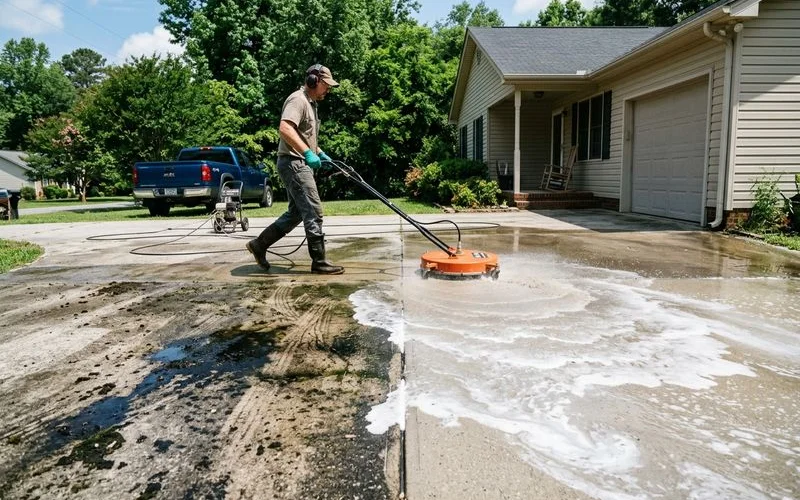
We constantly evaluate the environmental factors that speed up organic growth on concrete. Several specific conditions around your property will dictate exactly when to clean a driveway. North Carolina weather introduces unique challenges that alter the standard annual schedule.
Our technicians test for multiple types of stains before starting a job. Using the wrong chemistry on a specific stain can permanently etch the surface. For example, standard bleach washes do absolutely nothing for iron oxidation.
| Environmental Factor | Common NC Cause | Cleaning Frequency Impact |
|---|---|---|
| Heavy Tree Canopy | Loblolly pine sap and oak leaf tannins sink into concrete pores. | Wash every 6 to 9 months. |
| Sprinkler Overspray | Iron-rich well water leaves deep orange rust stains. | Requires specialized acid removal twice a year. |
| North-Facing Layout | Lack of UV light encourages green algae and mildew. | Wash every 9 months. |
| High Vehicle Traffic | Hot tire pickup and motor oil drips from daily use. | Spot clean oil immediately, full wash annually. |
| Landscape Edging | Red clay and mulch transfer onto the concrete surface. | Wash every 9 to 12 months. |
We use specialized restoration acids, like F9 BARC, to chemically neutralize iron stains from well water. This specific acid breaks the bond between the rust and the concrete. Standard pressure washing without this chemical neutralization often sets the rust stain deeper into the pad.
Why sealing extends the cycle
Our sealing process locks out moisture and significantly extends the time between required washes. Sealing concrete after a deep clean reduces stain absorption depth, provides a sacrificial barrier, and repels water. Sealed driveways typically need cleaning every two to three years instead of annually.
- Fills the microscopic pores: This action drastically reduces the stain absorption depth.
- Provides a sacrificial layer: Grime and oil sit on top of the sealer instead of bonding with the concrete.
- Repels pooling water: Efflorescence and mineral deposits cannot form on properly sealed surfaces.
We apply penetrating treatments to stop efflorescence, which is the white calcium carbonate powder you often see on unsealed brick. These treatments work by filling the porous surface. A proper seal ensures stains sit on top of the layer instead of soaking into the slab.
| Sealer Type | Lifespan | Performance Quality |
|---|---|---|
| Cheap Acrylics | 1 to 3 Years | Often peels and fails under hot tire traffic. |
| Silane-Siloxane | 5 to 10 Years | Chemically bonds deep into the concrete pores. |
Our product of choice is typically a silane-siloxane penetrating sealer for long-lasting results. Cheap acrylic sealers from big box stores simply do not hold up to North Carolina summers. A professional-grade application chemically bonds with the concrete to provide a decade of protection.
We always explain that while the cumulative cost over a decade is similar, the maintenance interval is significantly more relaxed. The sealer itself needs reapplication every three to five years depending on traffic. This trade-off makes daily upkeep much easier for homeowners.
Our team is ready to restore your curb appeal and protect your driveway from costly damage. Regular care is the smartest investment you can make for your property.
For professional concrete cleaning with optional sealing, see our full service details online or call 919-890-9074 today.
Frequently Asked Questions
Can I just wait until the driveway looks dirty?
Does sealing eliminate the need for cleaning?
Should I clean before fall or before spring?
Learn more about
Concrete & Driveway CleaningSurface-cleaner pressure washing and chemical stain treatment for driveways, patios, walkways, landscape edging, and commercial parking lots.
Related Guides
Concrete Sealing After Pressure Washing: Is It Worth It?
Acrylic vs penetrating sealer, lifespan extension, stain resistance, cost-per-year math.
How Much Does Driveway and Concrete Cleaning Cost in North Carolina?
NC concrete cleaning prices by sq ft, patio/walkway add-ons, sealing cost, multi-surface bundle savings.
Removing Oil, Rust, and Efflorescence from Concrete
Stain chemistry by type (hydrocarbon, ferric, calcium), cleaner approach per stain, why pressure alone fails.