Are Pressure Washing Chemicals Safe for Pets, Plants, and Pools?
What's in soft-wash mix, how we protect landscaping, when to keep pets in, and pool runoff impact.
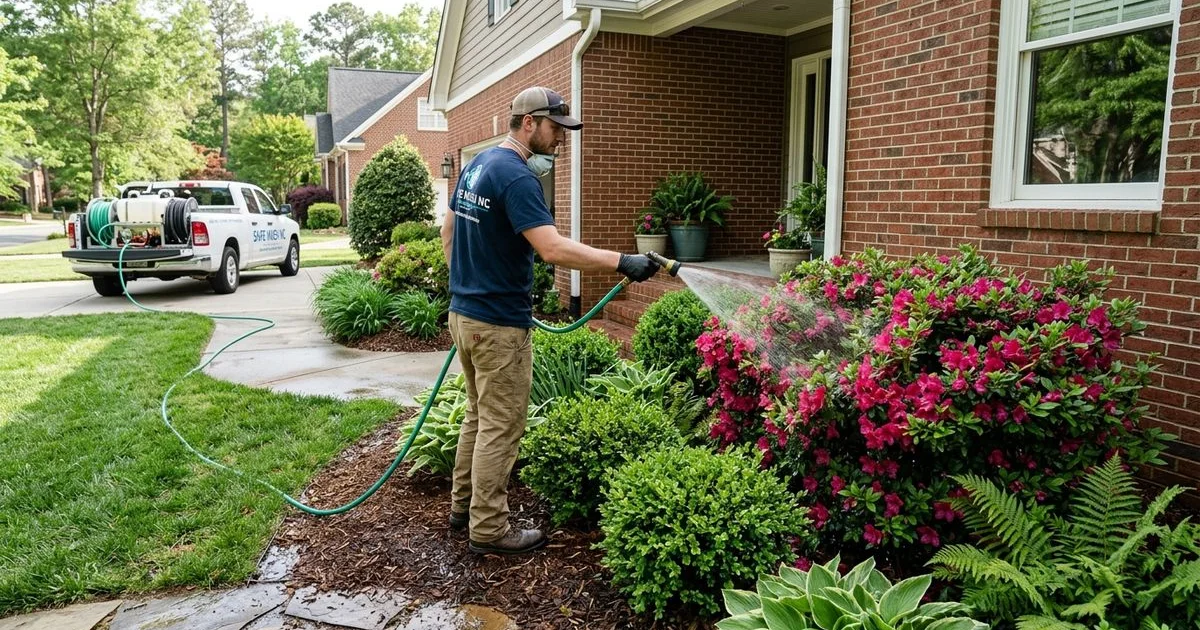
We constantly get asked, are pressure washing chemicals safe for pets and plants? Restoring curb appeal should never mean exposing delicate yards or curious animals to harsh, industrial-strength solutions. The reality is that modern professional soft washing relies on carefully controlled chemistry rather than brute force.
Our team wants to provide a transparent look at what goes into these mixtures. Let’s review the actual ingredients and walk through the exact protocols that keep your family secure.
What’s actually in soft-wash chemistry
Our standard soft-wash mix relies on two well-understood ingredients that are routinely used in residential settings. The goal is to ensure nothing exotic or persistent is left behind to accumulate in your local environment.
- Sodium hypochlorite: This is the exact same compound found in standard household bleach and pool sanitizers. This biocide effectively kills mildew, mold, and the specific cyanobacteria known as Gloeocapsa magma that causes ugly black streaks on your roof.
- Biodegradable surfactant: This soap-like additive reduces surface tension and helps the liquid cling to vertical siding or steep roofs. Increasing this “dwell time” means the active ingredients can do their job at much lower concentrations.
Our experts know that the word “chemical” often makes people nervous. The truth is that concentration matters far more than the ingredient itself. A professional application uses a highly diluted formula compared to what you might buy off the shelf for other home chores.
Let’s look at a clear comparison of sodium hypochlorite concentrations across common products. Pool owners handle much stronger versions of this exact same chemistry every single week.
| Common Household Product | Typical Sodium Hypochlorite Concentration | Primary Usage |
|---|---|---|
| Professional Soft Wash Mix | 0.5% to 1.5% | Exterior siding and roof cleaning |
| Household Laundry Bleach | 5.25% to 6% | Indoor laundry and disinfecting |
| Liquid Pool Shock | 10% to 12.5% | Swimming pool sanitation |
We guarantee these specific compounds naturally break down into simple salt and water within hours of exposure to sunlight and soil. The environment easily processes these harmless byproducts without any long-term accumulation.
How we protect landscaping
Our crew follows a strict, documented protocol of pre-soaking, tarping, and diluting to keep your yard completely safe during every single house washing visit. Protecting your property investment goes beyond the siding and extends directly to your carefully curated garden beds. Proper sodium hypochlorite landscaping management requires a proactive, multi-step defense system.
We implement several mandatory steps to ensure your vegetation remains vibrant and healthy.
The Pre-Wash Saturation Strategy
The first line of defense is a massive application of fresh water to all foundation plantings and grass. Plant cells act like tiny sponges that will absorb whatever liquid they touch first. Saturating the surrounding soil with clean water prevents the roots from absorbing any accidental runoff during the cleaning process.
Physical Barriers for Delicate Ornamentals
We take extra precautions for highly sensitive plants like Japanese maples, delicate ferns, and newly planted hostas. These specific ornamentals receive a physical barrier, usually a lightweight, breathable tarp, right before the wash begins. This physical shield guarantees that wind-blown mist cannot settle on fragile leaves.
Precise Concentration Calibration
Our technicians carefully calibrate the cleaning mix to the absolute lightest concentration required to kill the algae. Roof treatments demand a slightly stronger mix due to porous shingles, while delicate vinyl siding requires a much lighter touch. Dialing in the exact ratio minimizes the total volume of active ingredients introduced to the environment.
The Final Dilution Rinse
We always finish the job with a comprehensive post-rinse of the entire surrounding landscape. Copious amounts of fresh water dilute any lingering droplets on leaves or branches down to a negligible parts-per-million ratio. Your plants are left clean, thoroughly watered, and entirely unharmed by the process.
Pets, kids, and pool
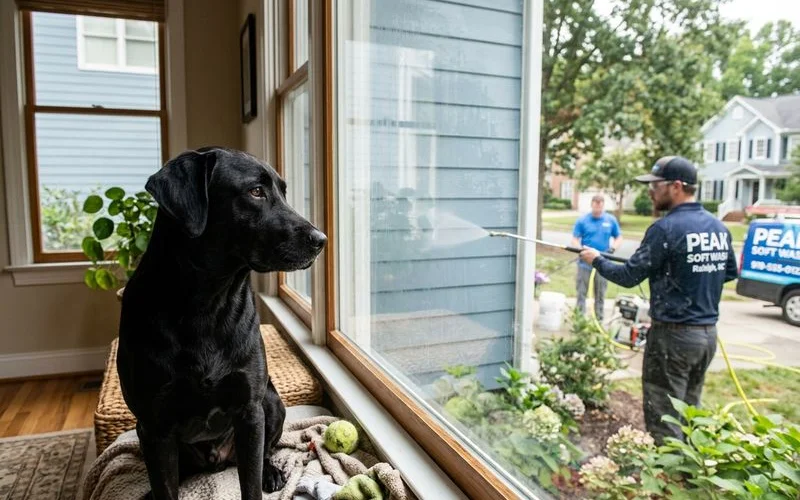
Our comprehensive safety protocols extend directly to the most important members of your household by keeping them indoors until surfaces are dry. The core rule of pressure washing pet safety is simple: keep pets completely away from the work zone while the surfaces remain wet.
The 2026 ASPCA guidelines confirm that highly diluted sodium hypochlorite solutions pose no harm to animals once the treated area has completely dried and aired out.
We ask that all dogs and cats remain inside for a typical drying window of two to four hours, depending on the local humidity and sunlight. Small puddles of the cleaning solution on driveways or patios are the only real ingestion risk for a thirsty dog. A completely dry surface is the official “all-clear” signal that the area is neutralized and safe for paws.
Our pre-wash checklist includes a few simple actions you can take to help the process go smoothly. Relocating a few outdoor items ensures zero risk of accidental overspray.
- Pet Items: Move all water bowls, chew toys, and outdoor bedding inside before the technicians arrive.
- Kids’ Play Structures: Treat swing sets and plastic toys exactly like the siding. Let them dry completely before allowing children to climb on them again.
- Swimming Pools: Cover your pool if possible. The diluted runoff from our wash is significantly weaker than standard liquid pool shock, but keeping the cover on maintains your precise water chemistry.
We know the idea of spraying cleaners around your home can feel intimidating at first glance. The actual risk profile is much closer to staying inside while a neighbor mows the lawn with a string trimmer. Our decades of industry experience and hundreds of successful cleanings across Raleigh prove that these methods are highly effective and incredibly safe.
If you are still wondering, are pressure washing chemicals safe for pets and plants, we encourage you to reach out. Booking a professional wash with a knowledgeable team ensures your home gets a pristine clean without compromising safety. We are ready to help you schedule your next exterior cleaning and show you the difference a calibrated approach makes.
Frequently Asked Questions
Will roof cleaning chemicals kill my hostas?
How long should I keep my dog inside?
Does the runoff affect my pool?
Related Guides
Best Time of Year for Pressure Washing in Raleigh
NC pollen calendar, late-spring optimal window, fall pre-winter wash — when to schedule in Raleigh.
DIY Pressure Washing: Why It Often Damages More Than It Cleans
Vinyl gouging, blown window seals, mortar erosion — rental-unit damage modes and when calling a pro saves money.
How Much Does Pressure Washing Cost in North Carolina?
Real NC prices for house wash, roof, concrete, gutters. What drives cost and what's included.
Soft Washing vs Pressure Washing: Which Does Your Property Need?
Most residential surfaces need soft wash, not pressure. PSI-by-surface guide for siding, roof, concrete in Raleigh, NC.