DIY Pressure Washing — Why It Often Damages More Than It Cleans
Vinyl gouging, blown window seals, mortar erosion — rental-unit damage modes and when calling a pro saves money.
We have witnessed the aftermath of well-intentioned exterior cleaning projects as the team at Elite Pressure Washing Raleigh.
Many property owners assume that blasting away dirt is the quickest path to a clean house. This assumption often leads to severe property damage and costly renting pressure washer mistakes.
Our service calendar frequently fills up with frantic calls from homeowners who just stripped the finish off their siding. The reality is that sheer water force rarely solves exterior maintenance issues.
Let us look at the actual diy pressure washing risks, review the safety hazards, and explore the exact methods industry professionals use instead.
The most common DIY damage modes
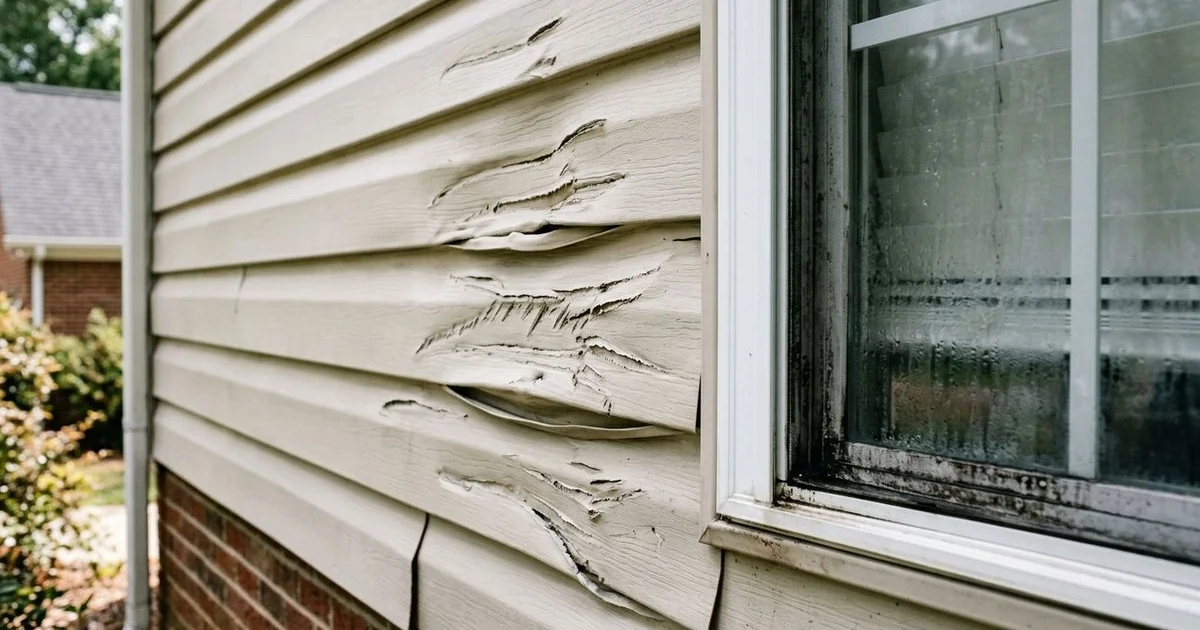
We consistently see the same severe damage patterns when property owners use high-pressure equipment. The most frequent issues include gouged vinyl siding, blown window seals, and eroded brick mortar.
Most residential property damage happens because inexperienced users underestimate the sheer force of the water. For example, grabbing a standard 3,000 PSI machine from a local Home Depot rental center seems like a smart weekend project.
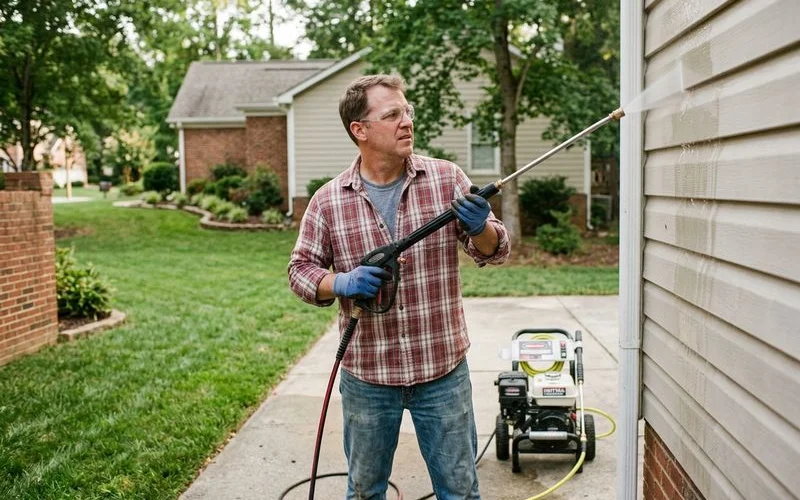
That intense pressure is actually strong enough to snap window seals and drive water directly behind overlapping exterior panels. Our teams see this specific issue cause hidden structural rot that costs thousands to fix.
In fact, full vinyl siding replacement in the US now averages between $8,000 and $25,000 as of 2026. We want to highlight the most frequent ways inexperienced users destroy building materials so you know exactly what to avoid:
- Vinyl siding gouges and warping: This happens by holding the wand too close, using a zero-degree turbo nozzle, or staying on one panel for too long.
- Blown window seals: Water driven behind the glazing under high pressure eventually causes failed insulated glass and visible interior fog.
- Mortar erosion on brick: Close-range pressure strips the mortar joints between bricks much faster than people realize.
- Shingle granule loss: A single pressure-wash pass on an asphalt roof strips away the protective ceramic granules and can age the shingles by five to ten years.
- Water intrusion behind siding: High pressure driven into horizontal seams pushes moisture into the sheathing and framing, which often causes severe hidden rot.
The injury side that people don’t think about
The physical risks of operating heavy-duty water pumps are far more serious than a little splashed mud. Pressure washing accounts for thousands of emergency room visits per year in the United States due to severe lacerations, falls, and chemical burns.
We regularly advise property owners to consider the actual dangers before starting a machine. As of 2026, the US Consumer Product Safety Commission (CPSC) continues to highlight these hazards, even issuing massive recalls in recent years for electric pressure washers that lacked ground-fault circuit-interrupters.
Operating a water-based machine without proper electrical protection creates a severe electrocution risk. Other recent CPSC safety alerts involved faulty capacitors in popular consumer models that exploded and caused facial injuries.
Common Physical Injury Categories
These equipment failures add to the long list of user-generated accidents. We see the same types of severe injuries repeated every spring:
- High-Pressure Injection Injuries: Lacerations from wand kickback at close range are extremely common. A concentrated zero-degree nozzle can easily slice through skin and introduce bacteria deep into the tissue.
- Fall Hazards: Ladder falls during second-story cleaning attempts occur frequently because the wand recoil easily throws users off balance.
- Chemical Burns: Severe skin and eye burns from over-concentrated, store-bought degreasers put untrained users in the hospital every season.
Our experience shows that none of these physical risks are worth the perceived savings on a standard professional wash job. The financial logic completely falls apart when the property owner ends up needing medical care or exterior repairs.
Why “pressure” isn’t even the right tool
The biggest conceptual problem with forcing water against your siding is that the equipment ignores the root cause of the stains. Mildew, green algae, and a black bacterial growth called Gloeocapsa magma are living organisms that require chemical treatment, not mechanical force.
These microorganisms need to be killed at the spore level with precise soft-wash chemistry. High-pressure water can temporarily blast away the visible biomass, but the green streaks return within months because the microscopic spores are still firmly attached.
We strictly follow a science-based method to solve this biological problem. As of 2026, the Asphalt Roofing Manufacturers Association (ARMA) continues to specifically address this issue in their official guidelines, explicitly stating that property owners should never use a power washer to clean algae from a roof surface.
The Science of Soft Washing
Industry leaders mandate a completely different cleaning protocol instead of mechanical force. ARMA formally recommends applying a diluted sodium hypochlorite solution to neutralize the organisms safely. Our comprehensive house washing service utilizes custom surfactants combined with this exact chemistry at sub-100 PSI.
This specialized blend safely eradicates Gloeocapsa magma while protecting the structural integrity of your property. The chemistry actually does the hard work of breaking down the organic material, and a gentle rinse simply flushes away what is already dead.
| Feature | High-Pressure Washing | Professional Soft Washing |
|---|---|---|
| Water Pressure | 2,000 to 4,000 PSI | Under 100 PSI |
| Cleaning Method | Mechanical force | Biological chemistry |
| Algae Spores | Leaves root system intact | Kills spores completely |
| Damage Risk | High (gouges, water intrusion) | Minimal to none |
We rely on this soft-wash technique because it provides the only durable, long-term cleaning approach for residential exteriors. It keeps your property looking immaculate for years rather than just a few short weeks.
Protect Your Property with Professional Care
Understanding these diy pressure washing risks is the first step in proper exterior maintenance. Renting heavy-duty equipment often leads to unintended structural damage and serious personal injury.
We encourage you to skip the weekend rental counter and choose a method that actually preserves your home.
Reach out to a professional soft-washing team today to schedule an inspection and restore your curb appeal safely.
Frequently Asked Questions
Can renting a pressure washer void my shingle warranty?
How much does it cost to repair pressure-wash siding damage?
Are electric pressure washers safer than gas?
Related Guides
Best Time of Year for Pressure Washing in Raleigh
NC pollen calendar, late-spring optimal window, fall pre-winter wash — when to schedule in Raleigh.
Are Pressure Washing Chemicals Safe for Pets, Plants, and Pools?
What's in soft-wash mix, how we protect landscaping, when to keep pets in, and pool runoff impact.
How Much Does Pressure Washing Cost in North Carolina?
Real NC prices for house wash, roof, concrete, gutters. What drives cost and what's included.
Soft Washing vs Pressure Washing: Which Does Your Property Need?
Most residential surfaces need soft wash, not pressure. PSI-by-surface guide for siding, roof, concrete in Raleigh, NC.