Soft Washing vs Pressure Washing — Which Does Your Property Need?
Most residential surfaces need soft wash, not pressure. PSI-by-surface guide for siding, roof, concrete in Raleigh, NC.
The honest framing
Our team sees the confusion around soft washing vs pressure washing every single day.
The term “power washing” has become a catch-all phrase for homeowners. In the trade industry, soft wash vs power wash actually compares two completely different methods.
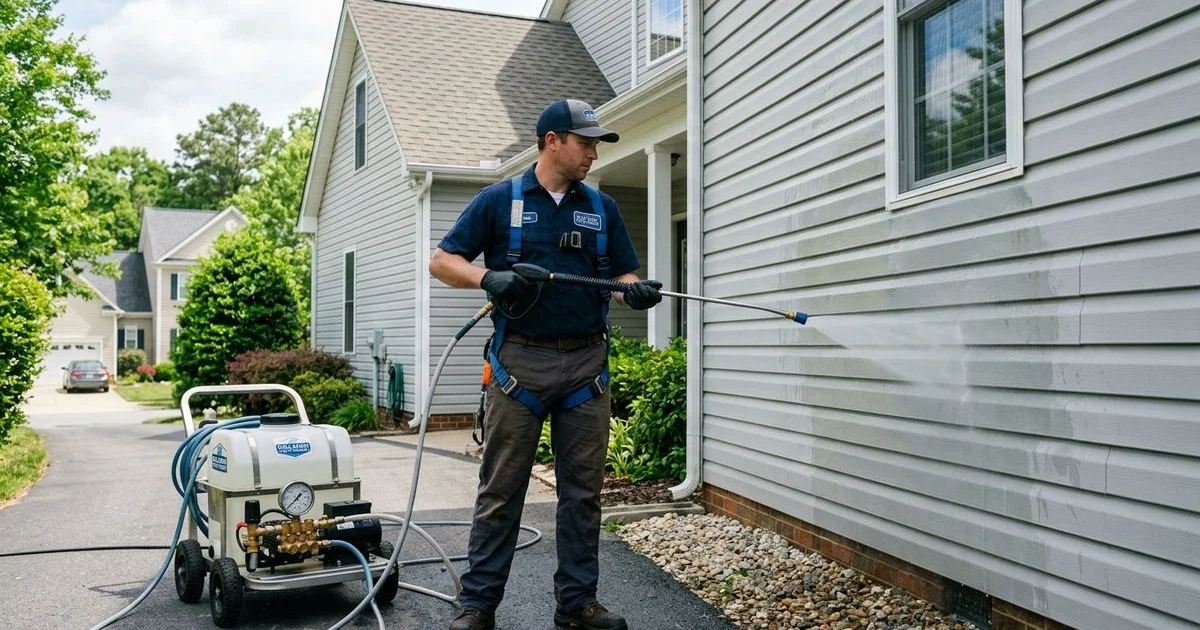
We use high water pressure, often 1,500 to 3,000 pressure washing psi, to blast dirt off a surface. Soft washing takes a much gentler approach. It relies on sub-100 PSI water mixed with biodegradable surfactants and sodium hypochlorite chemistry.
Our technicians rely on the chemistry to do the cleaning while the water just rinses it away.
Making the Right Choice for Your Property
For most residential exteriors in Raleigh, soft washing is simply the correct choice. You will risk serious damage if you use high pressure for house washing, roof cleaning, or most brick work.
We always reserve traditional pressure washing for durable concrete surfaces. Driveways, parking lots, and dumpster pads can handle the force. High pressure is necessary when chemistry alone cannot lift deeply embedded grime.
Surface-by-surface
Industry Guidelines for Exterior Maintenance
Our clients often ask us which method is safest for their specific siding or roofing material. Applying the wrong technique can instantly void manufacturer warranties.
A quick look at industry guidelines reveals very strict rules for exterior maintenance. We created this surface guide to help you protect your most valuable investments.
The Asphalt Roofing Manufacturers Association explicitly warns homeowners to never use a power washer on asphalt shingles. High pressure strips away the protective mineral granules and exposes the roof to early failure.
Protecting Vulnerable Materials
Our team strictly follows this guidance by using specialized pump sprayers that operate under 100 PSI. HardiePlank fiber cement siding requires similar caution to prevent water intrusion.
The manufacturer, James Hardie, advises keeping any water pressure well below 1,500 PSI to avoid driving moisture behind the seams. We see extensive water damage on homes where inexperienced cleaners ignored these exact warnings.
Concrete is the rare exception where high force is actually beneficial. Removing embedded tire rubber and oil stains from a driveway usually requires at least 3,000 PSI and a specialized surface cleaner.
Quick Reference Material Chart
| Surface | Right Method | Why |
|---|---|---|
| Vinyl siding | Soft wash (sub-100 PSI) | High pressure gouges and warps panels |
| HardiePlank fiber cement | Soft wash (sub-100 PSI) | High pressure drives water behind seams |
| Asphalt shingle roof | Soft wash (sub-100 PSI, ARMA-aligned) | High pressure strips granules and voids warranty |
| Brick | Soft wash primarily | High pressure erodes mortar |
| Stucco | Soft wash | High pressure damages texture and finish |
| Painted wood | Soft wash | High pressure strips paint |
| Concrete driveway | Pressure wash (surface cleaner) | Substrate handles it; chemistry alone cannot lift grime |
| Restaurant dumpster pad | Hot pressure wash + degreaser | Grease requires heat and pressure |
What surfactants actually do
We explain to every customer that soft washing is essentially a biological treatment. The reason this method works is biology rather than physical force.
Mildew, mold, and algae are living organisms that root themselves deeply into your exterior surfaces. Our most common enemy on roofs is a specific blue-green algae known as Gloeocapsa magma.
This organism causes those ugly black streaks because it actively feeds on the limestone filler used in asphalt shingles. The black stains create several costly problems for property owners.
- We see increased cooling costs because the dark algae absorbs solar heat.
- Premature aging occurs as the organism consumes the limestone and loosens protective granules.
- Rapid regrowth happens when traditional washing only removes the top layer of biomass.
The Power of Chemical Treatments
Our customized chemical mix dwells on the surface long enough to penetrate and eliminate the root system completely. Surfactants act as a sticking agent to help the biocide cling to vertical siding and sloped roofs.
The low-pressure rinse simply lifts the dead organic matter away without damaging the materials underneath. We guarantee that a professional soft wash treatment offers lasting results.
A proper chemical application typically prevents algae from returning for two to five years. The main takeaway is that removing exterior grime is a chemistry problem rather than a pressure problem.
Conclusion
Our team is ready to evaluate your property and recommend the perfect cleaning solution. Choosing between soft washing vs pressure washing does not have to be confusing.
The right method will restore your curb appeal and protect your exterior surfaces for years. We invite you to schedule a professional consultation today.
A simple phone call can save you from costly repair bills down the road. Protect your investment with the safest exterior cleaning techniques available.
Frequently Asked Questions
What PSI is safe for vinyl siding?
Will soft washing kill mold on my house?
Is pressure washing ever the right choice?
Related Guides
Best Time of Year for Pressure Washing in Raleigh
NC pollen calendar, late-spring optimal window, fall pre-winter wash — when to schedule in Raleigh.
DIY Pressure Washing: Why It Often Damages More Than It Cleans
Vinyl gouging, blown window seals, mortar erosion — rental-unit damage modes and when calling a pro saves money.
Are Pressure Washing Chemicals Safe for Pets, Plants, and Pools?
What's in soft-wash mix, how we protect landscaping, when to keep pets in, and pool runoff impact.
How Much Does Pressure Washing Cost in North Carolina?
Real NC prices for house wash, roof, concrete, gutters. What drives cost and what's included.